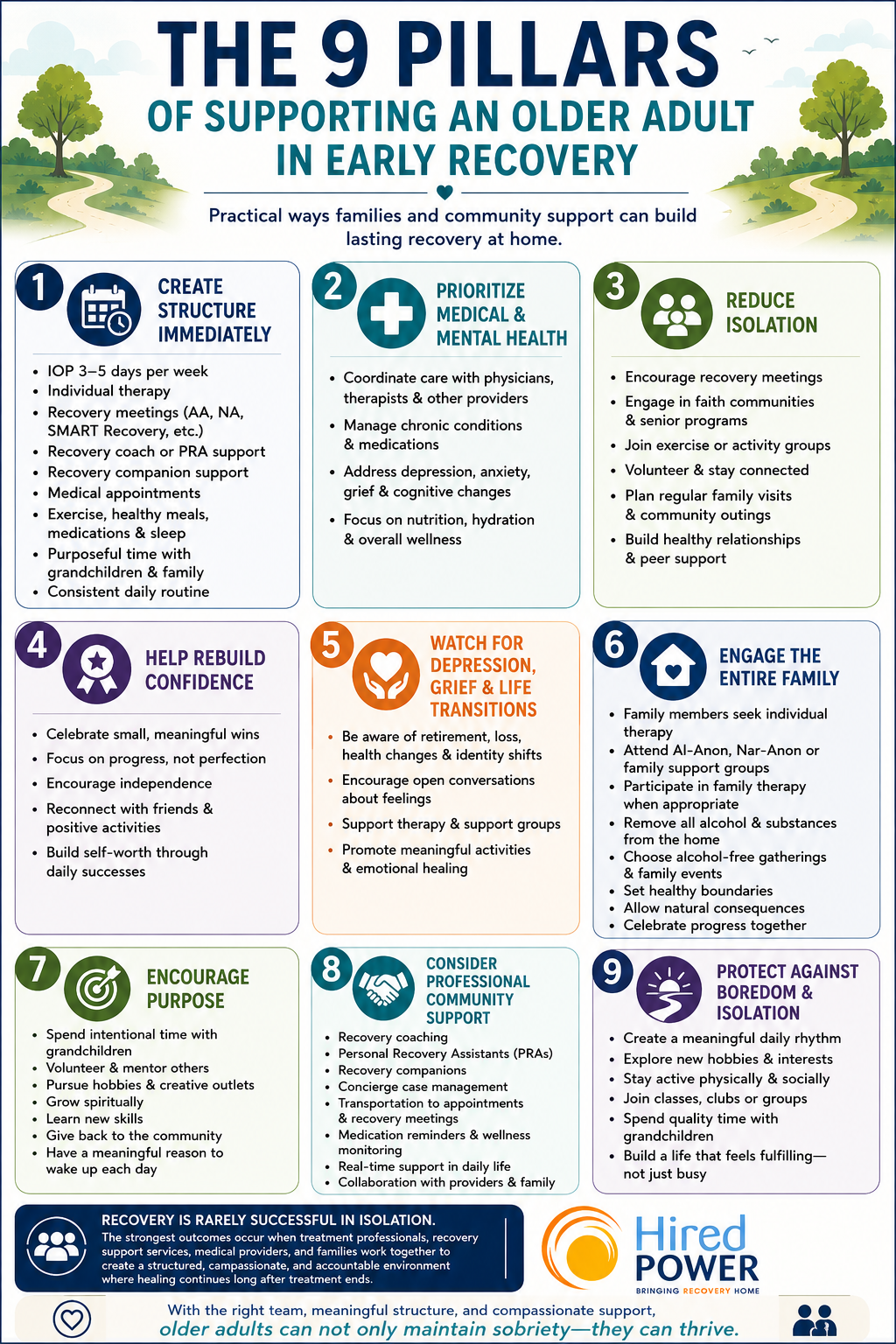
Supporting Older Adults in Early Recovery: A Family Guide to Building Lasting Recovery at Home

For older adults, leaving treatment is often the beginning of the most important phase of recovery. Returning home may mean facing chronic medical conditions, isolation, grief, cognitive changes, retirement, family conflict, or years of unhealthy routines.
While younger adults often return to work or school, older adults may have fewer structured responsibilities, making community support and purposeful daily living even more important.
Recovery isn’t simply about remaining sober—it’s about rebuilding a meaningful, healthy, and connected life. The weeks and months following treatment are when new habits are formed, relationships begin to heal, and long-term recovery takes root.
1. Create Structure Immediately
A predictable daily routine is one of the strongest protective factors during early recovery. Many older adults have spent months or years organizing their lives around substance use. Replacing those routines with healthy, purposeful activities reduces anxiety, improves confidence, and lowers the risk of relapse.
An effective weekly schedule may include:
- Intensive Outpatient Program (IOP) three to five days per week, when clinically appropriate
- Individual therapy
- Recovery meetings such as AA, NA, SMART Recovery, or other recovery communities
- Medical and psychiatric follow-up appointments
- Time with a Recovery Coach or Personal Recovery Assistant (PRA) to provide accountability, transportation, and support while navigating everyday situations
- Recovery Companion services for individuals needing a higher level of community support during the transition home
- Exercise, walking, yoga, swimming, or other physical activity
- Volunteer work, hobbies, or faith-based activities
- Purposeful time with grandchildren and family members when relationships are healthy and recovery is stable
- Regular sleep, meals, hydration, and medication routines
Recovery thrives when each day has purpose, connection, and consistency.
2. Prioritize Medical & Mental Health Care
Many older adults enter recovery while managing chronic medical conditions such as heart disease, diabetes, chronic pain, kidney disease, or cognitive changes. Depression, anxiety, and grief are also common and deserve ongoing attention.
Recovery professionals should coordinate closely with physicians, psychiatrists, therapists, and other healthcare providers to ensure medications, nutrition, hydration, and overall health support long-term recovery.
3. Reduce Isolation
Loneliness is one of the greatest relapse risks for older adults.
Encourage healthy connection through:
- Recovery meetings
- Faith communities
- Volunteer opportunities
- Senior centers
- Exercise groups
- Family visits
- Community outings
- Peer support
Meaningful relationships foster hope, accountability, and emotional well-being.
4. Help Rebuild Confidence
Many older adults experience shame after addiction. They may question whether meaningful change is still possible or struggle with guilt over the impact addiction has had on their loved ones.
Instead of focusing on past mistakes, celebrate meaningful progress, such as:
- Attending appointments
- Preparing healthy meals
- Exercising regularly
- Calling family members
- Managing medications independently
- Following through on commitments
- Reconnecting with friends and family
Recovery grows through confidence, not perfection. Every healthy decision builds momentum.
5. Watch for Depression, Grief, and Life Transitions
Older adults often experience significant life changes, including:
- Retirement
- Loss of a spouse or close friends
- Declining health
- Changes in independence
- Loss of identity or purpose
These experiences may have contributed to substance use and should be addressed through therapy, support groups, meaningful activities, and compassionate support.
Recovery is strongest when emotional healing receives the same attention as sobriety.
6. Engage the Entire Family
Addiction impacts the entire family, and recovery is strongest when everyone participates in the healing process. While the individual is working on sobriety, family members also have an opportunity to address the stress, grief, fear, and unhealthy patterns that may have developed over time.
Families can support recovery by:
- Seeking their own individual therapy to process the emotional impact of addiction and begin their own healing journey.
- Attending Al-Anon, Nar-Anon, or other family support groups to gain education, encouragement, and support.
- Participating in family therapy when appropriate to improve communication, rebuild trust, and establish healthier patterns of interaction.
- Learning about addiction as a chronic medical condition rather than a moral failing.
- Removing alcohol and other substances from the home whenever possible during early recovery.
- Choosing alcohol-free family gatherings and celebrations to create an environment that supports recovery.
- Establishing healthy boundaries that encourage accountability without enabling unhealthy behaviors.
- Allowing natural consequences while remaining compassionate and supportive.
- Celebrating progress and recovery milestones rather than expecting perfection.
Recovery is not only about helping one person stop using substances—it is about helping the entire family heal. When family members invest in their own emotional health, they become healthier supports while also improving their own quality of life.
7. Encourage Purpose
Purpose is one of the strongest protective factors in recovery.
Purpose may include:
- Spending intentional time with grandchildren
- Mentoring
- Volunteering
- Gardening
- Creative hobbies
- Spiritual growth
- Lifelong learning
- Helping others
People recover more successfully when they have meaningful reasons to get out of bed each morning.
8. Consider Professional Community-Based Recovery Support
Many older adults benefit from professional support after leaving treatment, particularly when they live alone, have complex medical conditions, or need help rebuilding confidence in everyday life.
Community-based recovery professionals can provide:
- Recovery Coaching
- Personal Recovery Assistants (PRAs)
- Recovery Companion services
- Concierge Case Management
- Transportation to appointments and recovery meetings
- Medication reminders and wellness monitoring
- Support while grocery shopping, exercising, attending social events, or navigating community activities
- Coordination with physicians, therapists, psychiatrists, and family members
- Real-time coaching through everyday situations where recovery is truly tested
Unlike treatment programs that end at discharge, community-based recovery support helps individuals practice recovery where they actually live. This ongoing guidance promotes independence while reducing the risk of relapse while allowing families to gradually transition from crisis management back into healthy family relationships.
9. Protect Against Boredom and Isolation
One of the greatest challenges for older adults is unstructured time. Retirement, an empty nest, or reduced physical abilities can leave long stretches of the day without purpose.
Rather than simply staying busy, create a life that feels meaningful.
Ideas include:
- Spending quality time with grandchildren
- Volunteering
- Gardening
- Joining a walking or fitness group
- Taking community education classes
- Learning a new hobby
- Participating in a church or faith community
- Mentoring others in recovery
Recovery isn’t just about avoiding substances—it is about building a life that is fulfilling enough that returning to substance use no longer feels appealing.
Recovery Is a Journey, Not a Destination
Older adults have tremendous capacity for healing. With the right combination of structure, medical care, therapy, family involvement, meaningful purpose, and ongoing community support, recovery can become an opportunity to build a healthier and more fulfilling chapter of life.
Recovery is rarely successful in isolation. The strongest outcomes occur when treatment professionals, recovery support services, medical providers, and families work together to create a structured, compassionate, and accountable environment where healing continues long after treatment has ended.
At Hired Power, we believe recovery doesn’t end when treatment ends—it continues where life happens. Whether through concierge case management, Personal Recovery Assistants, Recovery Coaches, Recovery Companions, or collaborative support with treatment providers and families, lasting recovery is built one day, one relationship, and one healthy choice at a time.
No one should have to navigate early recovery alone. With the right team, meaningful structure, and compassionate support, older adults can not only maintain sobriety—they can thrive and enjoy a renewed sense of purpose, connection, and hope.